Programmatic Advertising Campaigns: Real Examples, Strategy & Best Practices for 2026

Reading a definition of programmatic advertising tells you how the auction works. It doesn't tell you what a genuinely good campaign actually looks like, or why one brand's in-game placement outperforms industry benchmarks by a wide margin while another's display buy barely moves the needle.
This guide is built around real, named campaigns — what each brand actually did, which targeting or format choice mattered, and what happened as a result — followed by a practical framework for translating those patterns into a strategy for your own campaign, regardless of budget size.
Table of contents
What makes a programmatic campaign actually work
Before the examples — a pattern worth naming up front: the campaigns that perform best are rarely the ones with the biggest budget. They're the ones where the targeting logic, the creative format, and the channel all reinforce the same specific insight about the audience, rather than reusing one generic ad across every available placement.
That's the lens to apply to every example below: not "what did they buy," but "what did they understand about their audience that shaped the buy."
7 real programmatic advertising campaign examples
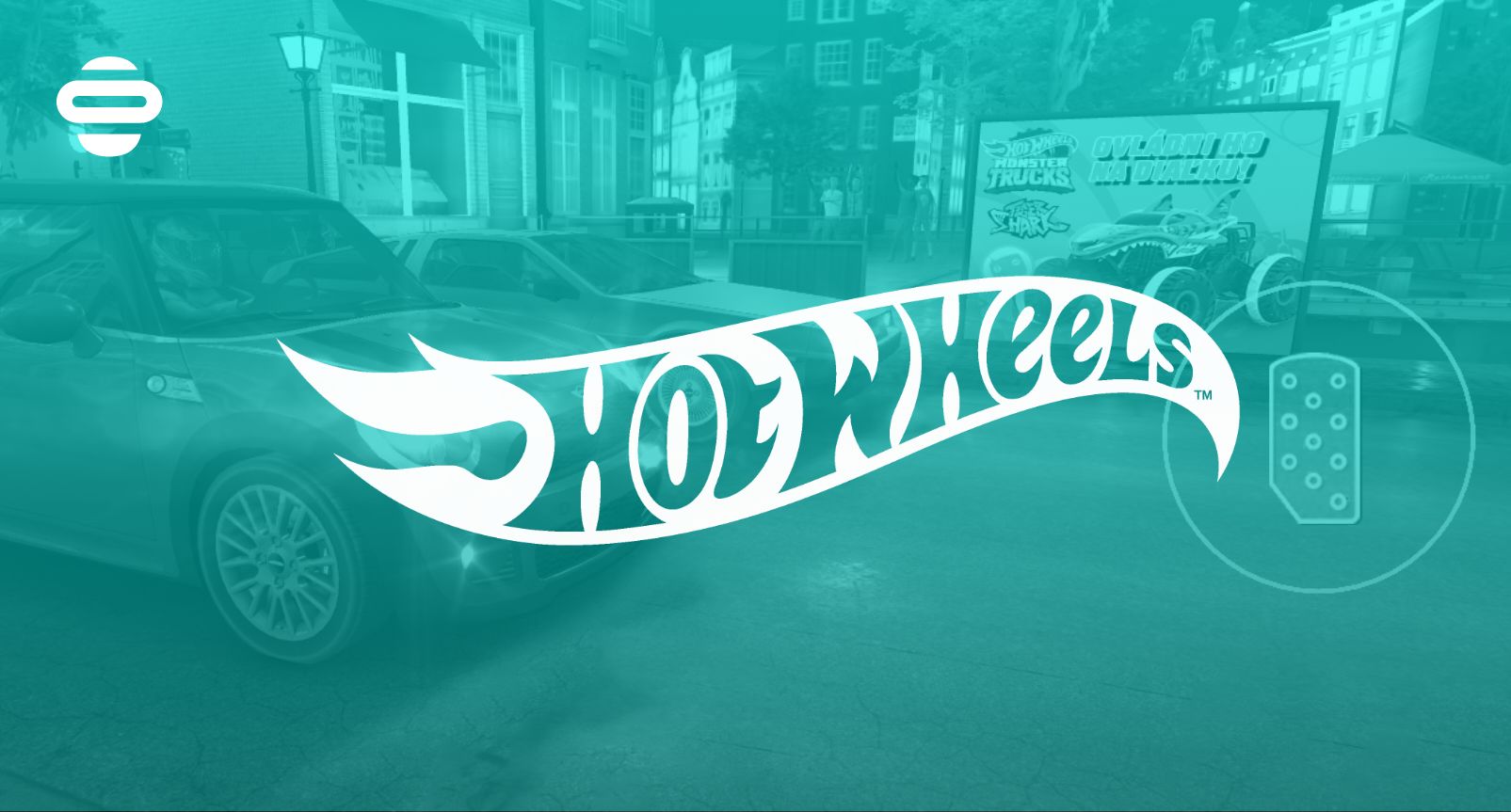
1. Hot Wheels — in-game advertising that doesn't feel like advertising
Facing a shift in how its audience actually spends time, Hot Wheels moved into in-game programmatic advertising, placing branded creative naturally within game environments rather than as an interruption — no pop-ups, no content-blocking takeovers. The campaign reportedly achieved an in-view rate well above the in-game industry benchmark, with a similarly strong fully-on-screen rate. The insight: a toy car brand's natural home is inside a gaming environment, and the closer the ad blends into that environment without disrupting it, the better it performs.
Takeaway: Channel selection should follow where the audience's attention already lives, not just where inventory happens to be cheap.
2. The Amanda Foundation — behavioral targeting for a genuinely values-driven goal
A nonprofit dedicated to pet adoption used programmatic targeting to match specific animals with the adopters most likely to actually want them — segmenting by interest in cats versus dogs, and even by lifestyle signals like activity level, to pair calmer pets with owners likely to want a calmer companion. Every animal featured in the campaign found a home.
Takeaway: Programmatic's behavioral targeting depth isn't just for ecommerce — any campaign with a genuine matching problem (the right message to the right specific sub-audience) can use the same targeting logic.

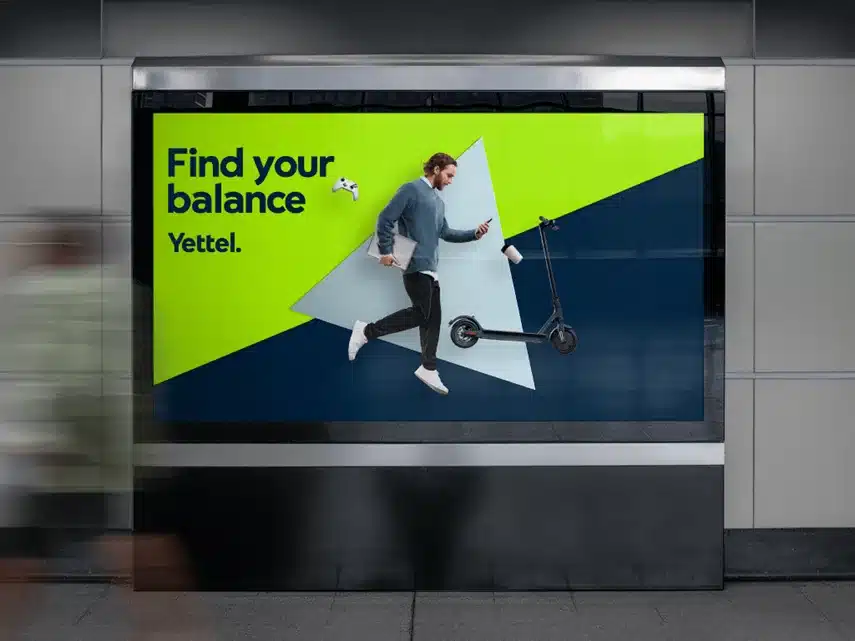
3. Yettel — testing a new channel through CTV
A telecom brand with broad existing reach used programmatic CTV specifically to access an audience segment it hadn't previously tested. A short, 17-second brand awareness video achieved a view-through rate in the mid-90s, with a strong share of served impressions resulting in fully completed views.
Takeaway: CTV's appeal isn't only for brands new to TV — it's also a tool for established advertisers to extend into adjacent audience segments without committing to a full linear TV buy.
4. IHG (InterContinental Hotels Group) — turning a data insight directly into ad copy
IHG's marketing team identified that most travelers book through third-party sites, generally unaware that booking direct is often meaningfully cheaper. Rather than a generic brand campaign, IHG built programmatic display ads that stated this price difference directly, using contextual and demographic targeting to reach people already in a hotel-research mindset. As IHG's COO Matt Luscombe described it, the advanced targeting let the team find a broader range of in-market travelers and reach them specifically with the "book direct" message.
Takeaway: The strongest creative idea in this campaign wasn't a clever visual — it was a genuinely useful piece of information, targeted precisely at the moment someone would find it relevant.

5. Haleon — story-driven video to build emotional brand recall
For a seasonal campaign promoting a nasal congestion relief product, global healthcare company Haleon used VAST video formats within a programmatic buy, leaning into storytelling rather than a direct product pitch. The campaign exceeded its planned view and impression targets by a wide margin.
Takeaway: Programmatic isn't only a precision-targeting tool — it's equally capable of delivering brand-building, emotionally-driven storytelling at scale, when the format (video) and the message (narrative, not just a feature list) are matched intentionally.

6. The Economist — contextual targeting to reach a specific reader mindset
The Economist used minimalist programmatic display ads, built around copy specifically aimed at readers unfamiliar with the publication's voice and positioning, and layered contextual targeting on top — placing the right message (finance, politics, technology, depending on the specific ad) into content environments where that exact topic was already top of mind. The campaign reached roughly half of its 650,000-subscriber target within just 9 days.
Takeaway: Contextual targeting and message-matching to content environment can outperform broad demographic targeting alone, especially for a brand whose core value proposition (its editorial voice) is hard to convey in a single generic creative.

7. McDonald's "Raise Your Arches" — dynamic creative tied to time and place
McDonald's used dynamic creative optimization (DCO) combined with location and daypart targeting to serve creative that adapted based on a viewer's actual time of day and location — rather than one static ad shown identically to everyone, everywhere. The campaign reportedly drove a meaningful lift in foot traffic and in-store sales.
Takeaway: DCO turns "right message, right time, right place" from a slogan into an actual mechanism — the same base campaign concept can serve dozens of contextually relevant creative variants without requiring a dozen separately-built campaigns.
Patterns across all 7 examples
Looking at these together, a few consistent threads emerge regardless of industry or budget:
The format matched the platform, not the other way around. In-game for Hot Wheels, CTV for Yettel, VAST video for Haleon — none of these brands picked a format first and forced an audience to fit it.
Targeting was built around a specific insight, not a generic demographic. "People who book through third-party sites without realizing direct is cheaper" (IHG) and "people unfamiliar with our editorial voice" (The Economist) are sharper, more actionable targeting briefs than "adults 25–54."
Measurement tied back to the original goal, not just to vanity metrics. McDonald's measured foot traffic and sales, not just impressions; the Amanda Foundation measured successful adoptions, not just clicks.
None of these required a uniquely massive budget to execute well. What scaled the results was precision in targeting and format choice — the same principle a smaller advertiser can apply at a fraction of the spend.
Building a programmatic campaign strategy: a practical framework
Step 1: Start with the insight, not the channel. Before opening any platform, write down the one specific, non-obvious thing you know about your audience that a generic campaign would miss. IHG's was a pricing-awareness gap. The Economist's was an editorial-perception gap. What's yours?
Step 2: Pick the format that lets that insight land. A data-driven insight (IHG's pricing fact) works well as display copy. An emotional brand story (Haleon) needs video. A "blend into the environment" insight (Hot Wheels) points toward in-game or native formats specifically.
Step 3: Choose targeting that operationalizes the insight, not just standard demographic buckets. Contextual targeting, behavioral signals, geo/daypart layering, or first-party retargeting — pick based on which targeting type actually captures the insight from Step 1.
Step 4: Set the metric before launch, and make it the metric that matches the actual goal. Foot traffic for a QSR brand, completed adoptions for a nonprofit, subscriber conversions for a publisher — not a generic CTR target that has no clear link to the underlying business objective.
Step 5: Build for in-flight optimization, not a "set and launch" mentality. Every example above benefited from a DSP's real-time bidding and reporting to find and reinforce what was working, rather than waiting for a post-campaign report to learn anything.
Choosing the right format and channel for your goal
Goal | Format/channel that tends to fit | Why |
|---|---|---|
Brand storytelling / emotional recall | Video (VAST), CTV | Narrative needs time and motion that static formats can't deliver |
Reaching an audience mid-activity, non-disruptively | In-game, native | Blends into an existing environment rather than interrupting it |
Communicating a specific data point or fact | Display, native | Concise, scannable, and cheap to produce variants for testing |
Driving in-store/local action | Display + DCO with geo/daypart targeting | Combines relevance of timing and location with creative flexibility |
Reaching a niche, well-defined audience | Display or video with layered behavioral/contextual targeting | Precision matters more than reach for a narrow segment |
Testing a new audience segment cheaply | Programmatic open auction (RTB) | Lowest commitment, fastest to launch and iterate |
Best practices that show up in every successful campaign
Define the audience insight in one sentence before touching a platform. If you can't state it specifically, the targeting brief that follows will default to generic demographics.
Match creative production effort to format complexity. A DCO campaign with dozens of contextual variants needs a templated creative system from day one — building each variant manually doesn't scale.
Use the deal type that matches your priority. Open auction (RTB) for cheap testing and scale, private marketplace for brand-safe premium reach, programmatic guaranteed when a specific placement absolutely must run.
Monitor in-flight, not just at the end. Every example above had room to reallocate budget toward what was working before the campaign concluded — that's the actual advantage programmatic has over a fixed, pre-negotiated media plan.
Tie the success metric to the business goal from day one, and report against that metric specifically, even if vanity metrics look more impressive in a deck.
Common mistakes that quietly sink programmatic campaigns
Running one creative across every channel and format. A static banner resized to fit a video slot or an in-game environment rarely performs as well as creative actually built for that specific format.
Targeting too broadly because narrow segments feel "risky." Several of the strongest examples above (Amanda Foundation, IHG) succeeded precisely because they targeted a specific insight-driven segment rather than maximizing reach.
Treating CTV, display, and video as separate, disconnected campaigns rather than a sequenced, cross-device strategy reinforcing the same insight across screens.
Measuring the wrong thing. A campaign optimized for clicks when the actual goal is foot traffic or completed conversions will report well and deliver poorly.
No plan for in-flight adjustment. Programmatic's real advantage over traditional media buying is the ability to reallocate budget mid-campaign — not using that capability wastes the format's biggest strength.
FAQ
Do I need a huge budget to run a programmatic campaign like these examples?
No. The common thread across these campaigns is precision — in targeting, format, and insight — not necessarily an outsized budget. A small or local advertiser can apply the same framework (specific insight → matched format → operationalized targeting → relevant metric) at a fraction of the spend.
What's the single most important factor in a successful programmatic campaign?
Based on the patterns across these examples, it's the specificity of the underlying audience insight — a generic "reach adults 25–54" brief consistently underperforms a sharp, specific insight like IHG's pricing-awareness gap or The Economist's editorial-perception gap.
How do I measure success for a programmatic campaign?
Define the metric before launch, and make sure it's actually tied to the business goal — foot traffic for a retail/QSR brand, conversions for ecommerce, completed actions for a nonprofit — rather than defaulting to impressions or CTR, which can look strong while the underlying business outcome lags.
Should I run the same campaign across display, video, and CTV simultaneously?
Generally yes, but with creative built specifically for each format and channel, ideally sequenced so each touchpoint reinforces the others (e.g., CTV for awareness, display or mobile for follow-through) rather than running as disconnected, duplicate efforts.
What's the difference between a programmatic advertising example and a programmatic advertising strategy? An example is a single campaign's tactical execution; a strategy is the repeatable framework behind it — defining the audience insight, format, targeting, and success metric — that lets a team build many successful campaigns rather than getting lucky once.