What Is an SSP (Supply-Side Platform) in Programmatic Advertising?
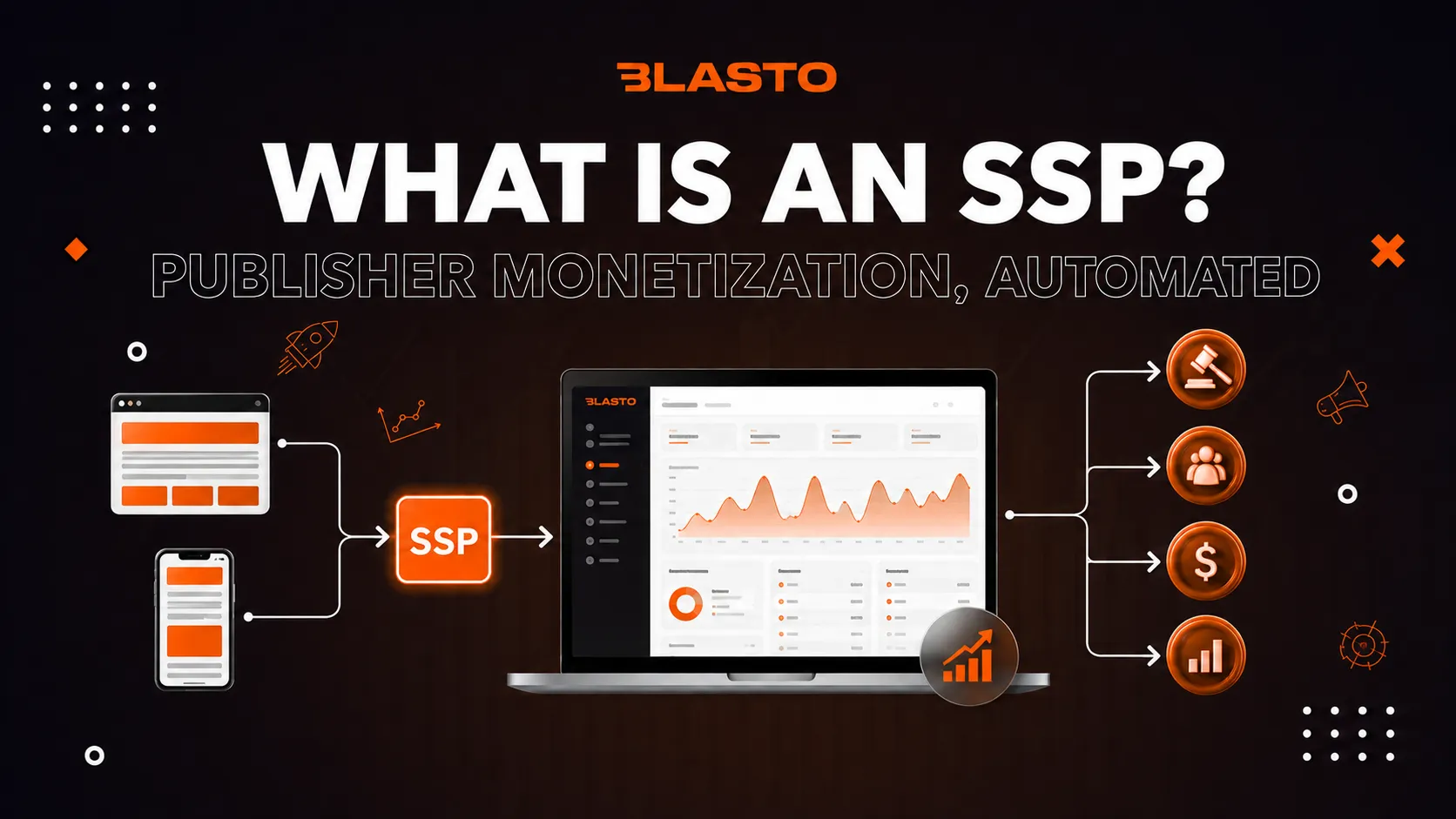
A Supply Side Platform (SSP) refers to software which allows publishers to automatically manage sales of online advertisement slots through several advertising exchanges, demand-side platforms, and other sources of demand for media slots. Rather than using one buyer or having to negotiate each deal individually, supply-side platforms create competition for the available impressions.
Supply-side platforms are integral parts of programmatic advertising systems. According to the IAB/PwC Internet Advertising Revenue Report, in 2025 U.S. programmatic ad spending excluding search grew by 20.5% year over year, reaching $162.4 billion.
How Does an SSP Work?
SSP links available ad impressions of the publisher to potential bidders. It handles auction policy, provides demand partners with information on available impressions, deals with bids, and helps select the advertising opportunity that is most beneficial to the publisher.
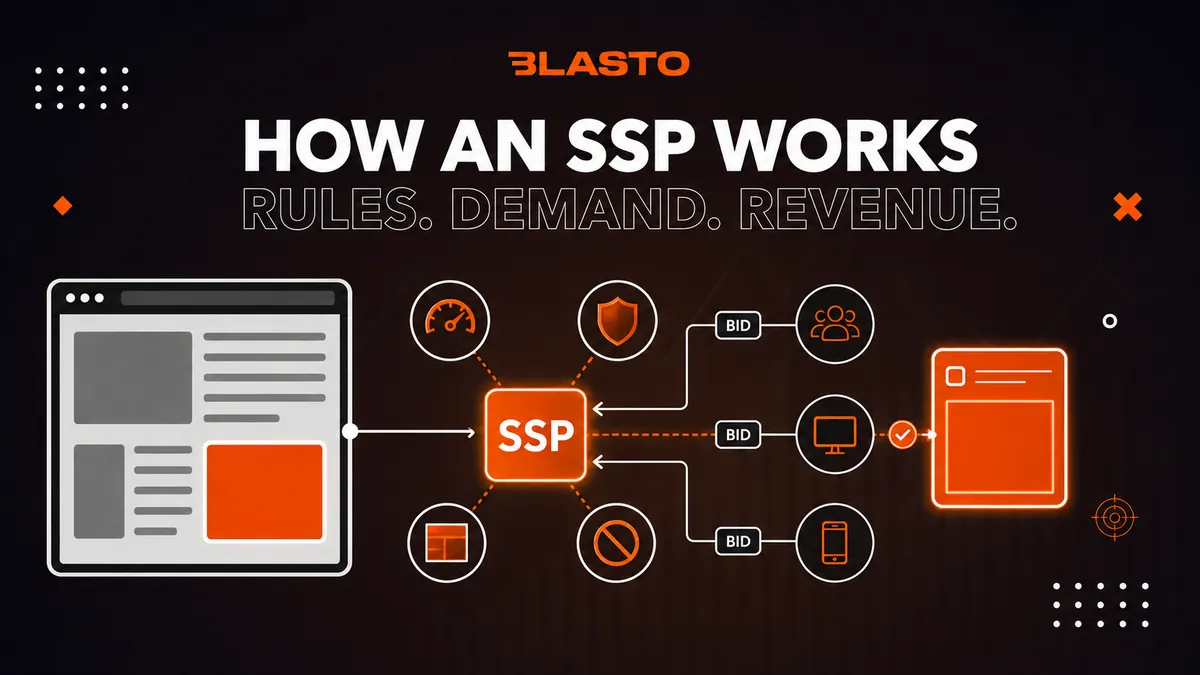
A simplified SSP programmatic transaction works like this:
The publisher defines its rules. Before inventory enters an auction, the publisher can configure parameters such as price floors, allowed or blocked advertiser categories, formats, placements, and brand-safety requirements.
An advertising opportunity becomes available. When a user opens a webpage, app, video, or another monetized environment, an eligible ad slot can generate a bid request.
Demand sources receive the opportunity. The SSP makes the impression available to connected DSPs, exchanges, and other buyers, depending on the publisher's setup.
Buyers submit bids. Demand-side platforms evaluate the impression based on campaign targeting, budget, bidding strategy, and other available signals.
The best eligible bid proceeds. Auction rules and publisher restrictions are applied, and the winning demand can then compete with other eligible campaigns or be selected for delivery depending on the ad-serving architecture.
These decisions happen extremely quickly. Modern real-time bidding infrastructure is designed around sub-second auctions, with IAB Tech Lab describing sub-100ms response times as a requirement for real-time bidding systems.
Where header bidding fits
The use of header bidding means that the publisher gets multiple bids from multiple demand sources before the main ad server reaches its decision.
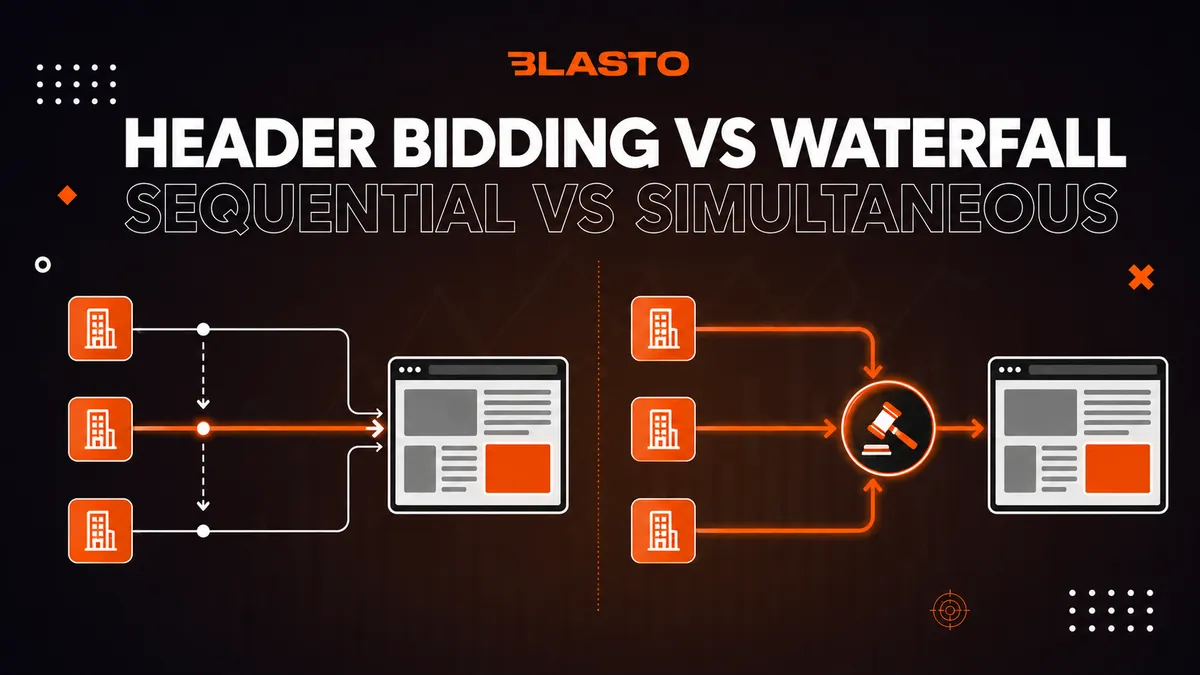
Publishers used to use a waterfall method. The sources would be contacted one by one: the impression was either sold to the first source or it would move on to the next and next source. The problem with this method was that a low priority demand source ready to bid higher could never reach the deal.
Header bidding changes the process by allowing several buyers to compete at approximately the same time. Prebid describes it as a way for publishers to collect bids from multiple demand sources and have those bids compete directly with demand available through the ad server.
As a result, programmatic advertising SSP infrastructure can expose inventory to broader competition before the final advertising decision is made.
Key Components of an SSP
Although specific platforms differ, most SSP ad tech solutions combine several core capabilities.
1. Ad exchange integrations
An SSP connects publisher inventory with multiple marketplaces and demand sources rather than depending on one buyer.
These connections can include ad exchanges, DSPs, agencies, private marketplaces, and other programmatic buyers. Broader demand connectivity can increase competition for eligible inventory, although the quality and efficiency of those connections matter as much as their number.
Publishers comparing potential partners can also review Blasto's guide to the best ad exchanges for publishers.
2. Analytics and reporting
A supply side platform advertising dashboard gives publishers visibility into how inventory is being monetized.
Important metrics commonly include:
Fill rate
eCPM
Revenue
Bid rate
Win rate
Revenue by placement
Revenue by demand source
Performance by device or format
Reporting helps publishers identify which demand relationships generate value and where inventory is being under-monetized.
3. Inventory management
Publishers need control over what they sell and how it can be purchased.
An SSP may allow inventory to be organized by website, app, placement, format, device, geography, content type, or other attributes. Publishers can then apply different monetization rules to different inventory segments.
For example, premium video inventory may have a different price floor and buyer policy from standard display placements.
4. Header bidding
Header bidding gives multiple demand partners the opportunity to bid before the primary ad server selects an ad.
Instead of giving buyers sequential access, the publisher can create greater simultaneous competition for each impression. Modern header bidding can work across web, mobile apps, video, CTV, and server-side environments rather than being limited to JavaScript placed in a webpage header.
5. Price floors and brand safety
A price floor defines the minimum acceptable bid for particular inventory. Publishers can apply different floors based on placement, format, market conditions, demand source, or other factors.
SSPs can also support controls that restrict unwanted advertisements, advertiser categories, domains, creatives, or demand sources.
These controls are important because maximizing publisher revenue is only one part of SSP advertising. Publishers also need to protect their audience experience, content standards, and brand reputation.
Examples of SSP Platforms
There is no single SSP supply side platform suitable for every publisher. Platforms differ in demand relationships, formats, integrations, geographic coverage, reporting, and publisher requirements.
Here are several well-known supply side platform examples.
Google Ad Manager
Google Ad Manager is a publisher advertising management platform that integrates ad delivery and programmatic advertising.
Publishers can manage direct campaigns and auction demand and link their inventory to Google and other networks and exchanges. It is therefore more extensive than an SSP alone and is frequently used as the central ad server of publishers.
Magnite
Magnite operates sell-side advertising technology across formats including CTV, online video, display, and audio.
Its publisher technology is used to manage programmatic demand and inventory monetization, with a particularly substantial presence in streaming and CTV environments.
PubMatic
PubMatic offers an SSP and several other publisher solutions for web, mobile applications, video, and connected TV inventory. The publisher solution of PubMatic includes access to demand, analytics, yield management features, and inventory control capabilities.
Index Exchange
Index Exchange allows publishers and apps to monetize their display, video, mobile, native, and streaming TV advertising through programmatic buying and selling. The platform additionally offers marketplaces, deals, data, and reporting capabilities for media sellers and buyers.
OpenX
The OpenX supply and exchange solutions include display, video, mobile, CTV, native, and other types of advertisements. Publisher solutions offered by the company include demand connectivity, header bidding solution, monetization control, audience management, and inventory management solutions.
Blasto SSP
Blasto provides publisher monetization technology within the broader Blasto programmatic ecosystem.
Its publisher integrations include Prebid Integration, Real-time Bidding, and VAST Support, allowing publishers to connect inventory through common programmatic and video advertising workflows. Blasto also supports multiple advertising formats and device environments.
These are only several SSP examples. Publishers should evaluate individual platforms based on their own inventory, audience, geographic footprint, technical resources, formats, and monetization objectives rather than simply choosing the largest provider.
SSP vs DSP: A Quick Comparison
SSP stands for the Supply Side Platform, whereas the Demand Side Platform is represented by the DSP. The SSP platform serves publishers to offer their ad inventory to the buyers and optimize monetization, while DSP is used by advertisers/ agencies to assess ad inventory, submit bids, and optimize campaigns.
In simple terms:
SSP → publisher → sells inventory
DSP → advertiser → buys inventory
The technologies interact during programmatic transactions but serve different customers and objectives. For a deeper breakdown of auction roles, metrics, pricing models, and examples, read DSP vs SSP: What's the Difference?
What to Look for When Choosing an SSP
Choosing an SSP affects revenue, page or app performance, inventory quality, and the publisher's visibility into the programmatic supply chain. Comparing providers only by the number of connected demand partners can therefore be misleading.
Publishers should evaluate at least five areas.
1. Fee and reporting transparency
Understand how the SSP earns revenue and what deductions occur between an advertiser's bid and the publisher's payment.
Reporting should make it possible to analyze revenue, eCPM, fill, demand-source performance, inventory performance, and other relevant auction data without relying on opaque aggregate numbers.
Transparent reporting also makes it easier to identify inefficient supply paths and compare monetization partners.
2. Demand quality
More integrations do not automatically mean better monetization.
Evaluate which DSPs, agencies, exchanges, and other demand sources can access your inventory. Direct relationships with reputable buyers and differentiated demand can be more valuable than maintaining many redundant connections to the same advertising budgets.
The important question is not simply how many buyers are connected, but how much useful competition those connections create.
3. Auction latency and timeout management
Every additional auction process can affect performance if it is poorly implemented.
Publishers should understand:
How quickly the SSP processes requests
How timeouts are configured
How often buyers fail to respond before the deadline
Whether server-side integrations are available
How header bidding affects page, app, or video performance
A bidder that theoretically offers a high CPM has little value if its responses regularly arrive too late to participate.
4. Brand safety and fraud controls
The platform should help publishers control which advertising can appear alongside their content.
Look for functionality related to creative scanning, advertiser blocking, category controls, invalid-traffic detection, malware prevention, and other quality protections.
These capabilities are especially important when inventory is exposed to a large number of programmatic demand sources.
5. Supply-path optimization support
Supply path optimization, or SPO, originally emerged primarily as a buyer-side practice for reducing unnecessary intermediaries between advertisers and publishers. It increasingly affects publishers as well.
Publishers benefit from understanding how directly their inventory reaches buyers, whether multiple intermediaries are reselling the same impression, and whether their SSP relationships create efficient paths to advertiser demand.
A strong ssp digital marketing strategy is therefore not simply about adding more monetization partners. It is about building a transparent mix of demand connections that creates useful competition without unnecessary duplication, latency, or fees.
FAQ
How is an SSP different from an ad network?
An ad network traditionally aggregates publisher inventory and packages or resells it to advertisers. The network often plays a more direct intermediary role in determining which inventory buyers can access.
The SSP is basically an advanced platform which helps in managing and auctioning out publisher inventory through several programmatic demand sources. The SSP usually provides greater control to publishers over pricing, inventory management, demand integration, and auction management.
How many SSPs should a publisher use?
There is no universal number.
Multiple connections to programmatic SSPs may foster more demand competition but will also cause duplication of demand paths, operational difficulties, higher costs, and latency in the process. It is important for publishers to evaluate whether additional SSPs bring new demand or just duplicate existing buyers.
Thus, for most publishers, it is not about using the maximum amount of SSPs but rather keeping a set of efficient SSPs that complement each other.
For many publishers, the goal is therefore not to use the greatest possible number of SSPs but to maintain an efficient group of complementary monetization partners.
Does an SSP charge the advertiser or the publisher?
SSP commercial models vary.
The conventional way for an SSP to get its fees is from the sell side. It may be based on a certain percentage of the advertiser fees that a publisher receives from ads or any other fee structure. But nowadays, the programmatic companies have many products that they operate under different fee structures.
What is header bidding in simple terms?
Header bidding enables multiple advertisers to bid on the same ad impression within a short period before the ad server decides.
Consider selling a product by requesting bids from many interested buyers rather than soliciting one buyer’s offer and waiting for him to reply before you move on to another buyer. That is the fundamental principle of header bidding.
Is an SSP the same as an ad exchange?
Not necessarily, although the distinction has become less rigid.
SSP is mainly an advertiser-facing technology for managing and optimizing the supply. Ad exchange is the technological platform that enables the buying and selling of advertising supplies and demands. Modern day platforms are often integrated with both SSP and ad exchange capabilities, and hence the two terms are used synonymously in industry discourse.
What does SSP mean in digital advertising?
SSP stands for Supply-Side Platform or Sell-Side Platform. In both cases, it refers to technology used primarily by publishers to automate the sale and optimization of digital advertising inventory.
When people search for terms such as “SSPs advertising”, “SSP ad”, or “programmatic advertising SSP,” they are generally referring to this publisher side of the programmatic ecosystem.
How Blasto SSP Helps Publishers
Blasto's publisher technology connects media inventory with programmatic advertising demand while giving publishers infrastructure for automated monetization.
The platform supports three important integration approaches:
Prebid Integration: Publishers can integrate Blasto into header bidding workflows and allow its demand to compete alongside other eligible sources.
Real-time Bidding: Available impressions can be transacted through automated auctions in real time.
VAST Support: Publishers with video inventory can use VAST-compatible workflows for programmatic video advertising.
Blasto supports advertising across formats including display, video, CTV, mobile, and audio, enabling publishers with different types of inventory to participate in the same broader programmatic ecosystem.
The objective is to give publishers access to advertising demand through competitive auction infrastructure while maintaining control over how inventory is monetized.
Publishers interested in connecting their inventory can explore the Blasto SSP publisher solution.
Conclusion
A supply side platform gives publishers the technology needed to automate inventory sales, connect with programmatic demand, manage auctions, and optimize advertising revenue. Instead of depending on a single buyer, publishers can use SSP infrastructure to create competition between multiple demand sources while maintaining control over pricing and inventory rules.
The right SSP should offer more than access to buyers. Transparency, auction speed, quality controls, reporting, demand relationships, and efficient supply paths all influence the real value of an integration.
For publishers looking to monetize inventory through Prebid, VAST, and real-time bidding integrations, explore Blasto SSP and its publisher monetization capabilities.