What Does the DSP Acronym Mean? The Most Common Definitions
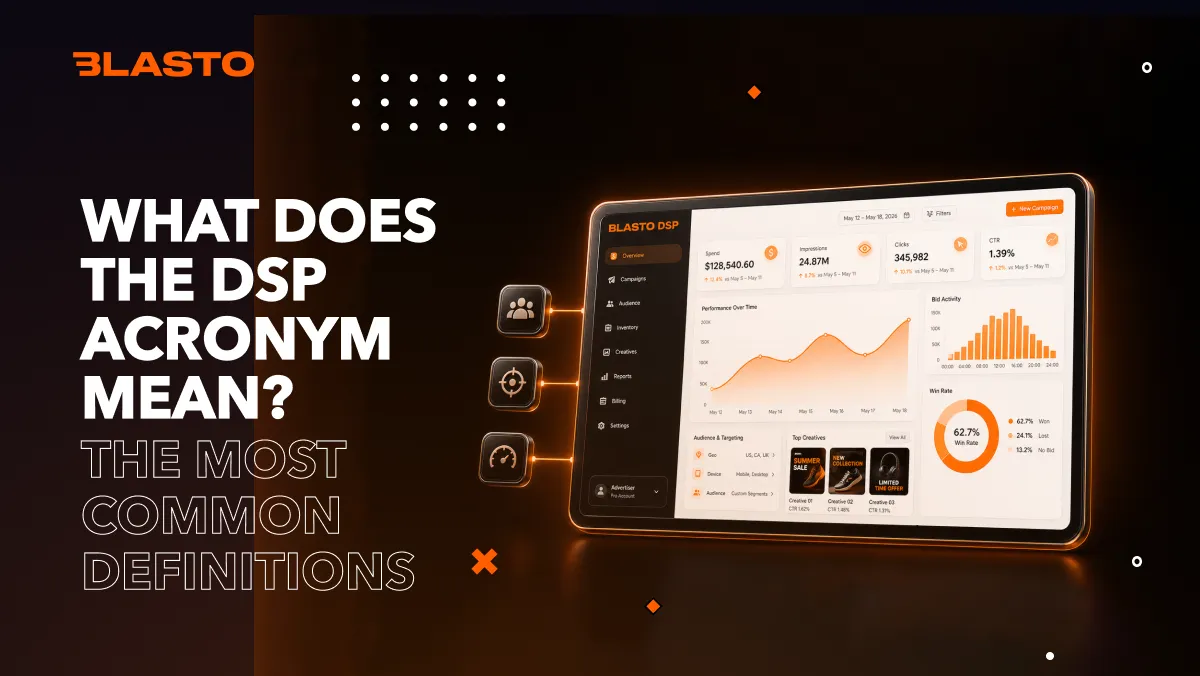
There are various definitions of the DSP acronym based on the discipline to which it is related. For instance, in digital marketing, the DSP acronym stands for demand-side platform and it describes the technologies that are used by advertisers to buy ad inventories programmatically. However, there are other definitions of DSP including direct support professional and digital signal processor/processing.
The Three Main Meanings of DSP
The meaning of the abbreviation DSP depends on the industry in which it appears.
DSP in advertising – Demand-Side Platform. A Demand-Side Platform is a program which enables automated buying of digital advertising by advertisers and agencies from different publishers, ad exchanges, and supply-side platforms. As defined by IAB, a DSP is the technology that facilitates digital media buying offering such features as audience targeting, bidding, budget management, and performance reports.
DSP in social services – Direct Support Professional. In the USA, a Direct Support Professional assists individuals with disabilities in various fields of their daily activities. The abbreviation DSP is used by the U.S. Department of Labor for this profession.
DSP in electronics – Digital Signal Processing/Digital Signal Processor. Digital Signal Processing (DSP) means methods employed for the manipulation of the digitized signals such as audio, imagery, and communication data. DSP can also be understood as a Digital Signal Processor which is a hardware for the efficient implementation of DSP.
The rest of this article focuses on DSP as Demand-Side Platform, the advertising technology used by Blasto and other programmatic advertising platforms.
DSP (Demand-Side Platform) in Advertising: A Closer Look
In advertising, a DSP is software that centralizes the automated purchase of digital advertising inventory.
Advertisers don’t have to negotiate separately with the various sites, apps, streaming channels, and other media owners. One platform will help them access inventory from multiple exchanges and suppliers. It analyzes the ad placement opportunity and makes a decision on whether it is suitable for the ad campaign or not.
A typical DSP can help advertisers:
Reach audiences using contextual, geographic, behavioral, device, and other available targeting signals
Participate in real-time bidding
Set campaign budgets and bidding strategies
Manage creatives across multiple formats
Control frequency and pacing
Measure and optimize campaign performance
Access inventory from multiple publishers and supply sources through one interface
Advertisers, advertising agencies, and trading desk teams are the primary users of DSP technology.
The name Demand-Side Platform reflects its position in the advertising transaction. Advertisers create demand for available advertising inventory, so technology representing advertisers operates on the demand side.
Ad tech also relies heavily on abbreviations because many of its core technologies and processes have long technical names. DSP sits alongside terms such as:
DMP — Data Management Platform
RTB — Real-Time Bidding
This terminology helps distinguish the different roles involved in automated media buying. The DSP represents buyers, while other technologies handle publisher supply, data, auctions, measurement, and delivery.
Examples of DSP Used in Advertising
The term DSP can appear in advertising discussions in several ways.
For example:
“We launched the campaign through a DSP.” This means the advertiser used a Demand-Side Platform to purchase media programmatically.
“The publisher's inventory is available to our DSP.” This means the buying platform can access eligible impressions through connected programmatic supply.
“We are choosing a DSP for the brand.” In this context, the advertiser or agency is comparing platforms based on inventory access, targeting, optimization, reporting, pricing, and other capabilities.
“The DSP submitted a bid for the impression.” This describes the platform participating in an automated advertising auction on behalf of an advertiser.
Well-known DSP platforms include Google Display & Video 360, The Trade Desk, Amazon DSP, and Blasto DSP.
Each platform has its own inventory relationships, targeting capabilities, workflows, commercial model, and target customers, but all operate on the advertiser side of the programmatic ecosystem.
Blasto DSP is a Demand Side Platform for advertisers and agencies. It enables programmatic advertising campaigns through display, video, connected TV (CTV), audio, mobile, and in-app ads with contextual and behavioral targeting, frequency management, and AI-powered optimization.
DSP vs SSP: Don't Get Them Confused
DSP and SSP are closely connected, but they represent opposite sides of a programmatic advertising transaction.
DSP works mainly for advertisers when it comes to purchasing advertisements, while the SSP works mainly for publishers when it comes to selling and monetizing advertisements. When there is an impression to be made available, the supply side platform ensures that it becomes available to the buyers through its infrastructure.
In short:
DSP = demand / advertiser / buying
SSP = supply / publisher / selling
For a more detailed explanation of how the two technologies differ and interact, see DSP vs SSP: What's the Difference?.
FAQ
What does DSP mean in advertising?
In advertising, DSP stands for Demand-Side Platform. It is software advertisers and agencies use to purchase digital advertising inventory programmatically across multiple publishers, exchanges, and supply sources.
What is the difference between a DSP and an SSP?
A DSP works on the advertiser or demand side of the transaction and helps buyers purchase impressions. An SSP works on the publisher or supply side and helps media owners sell and optimize their available advertising inventory.
For the complete comparison, read DSP vs SSP: What's the Difference?.
Is a DSP the same as an ad network?
No. Although both can give advertisers access to digital inventory, they traditionally operate differently.
An ad network typically aggregates publisher inventory and offers that inventory to advertisers. A DSP is a technology platform that gives buyers automated access to inventory from multiple sources and allows impression-level decisions based on campaign targeting, bidding rules, budgets, and other signals.
Does DSP always mean Demand-Side Platform?
No. The meaning depends on context.
A DSP in advertising refers to software where the automatic purchase of ad inventory is done. The DSP will allow the advertisers not to have to negotiate individually with the different media owners such as the websites, apps, and other media owners but will provide access to various sources of inventory via the use of one single platform. It evaluates the different ads and bids on the impressions.
Conclusion
There are various definitions associated with the term "DSP," however, in digital advertising it refers to "Demand-Side Platform." The Demand-Side Platform provides advertisers with one platform where they can connect to the programmatic inventory, assess advertising opportunities, bid on impressions, and analyze campaigns.
If the term DSP is used along with "SSP," "RTB," "ad exchange," "inventory," "bidding," or "programmatic advertising," then it most likely means a Demand-Side Platform.
Advertisers looking for a programmatic buying platform can explore Blasto DSP to learn more about its targeting, optimization, inventory access, and campaign capabilities.